
Trusted by world-class enterprises








Clearance markdowns run through pricing algorithms that evaluate sell-through rates, inventory age, and margin floors. When an update changes how the algorithm rounds or sequences — your clearance event either gives away margin or doesn't move product. You find out from store managers calling in, not from a test.
Points accrual rules, tier multipliers, redemption thresholds, partner earn rates — they all live as configuration in your cloud applications. One patch changes how a tier multiplier evaluates, and millions of customers earn the wrong points. Your customer service center finds out before your IT team does.
Corporate stores and franchise locations run different pricing, tax, labor, and inventory configurations. Updates apply uniformly — but your configurations aren't uniform. One patch breaks the franchise pricing override, and 200 franchise locations are selling at the wrong price.
Buy online, return in store. Buy in store, exchange online. Each path has different refund rules, restocking logic, inventory credit calculations, and tax adjustments. When an update changes how one path evaluates, customers in that channel get the wrong refund — and your reconciliation breaks.
Your vendors have strict EDI compliance requirements — ASN timing, invoice matching, carton labeling. When an ERP update changes how your 856 or 810 transactions generate, you don't find out until chargebacks arrive weeks later. Each chargeback: $500-$10,000.
Demand-based scheduling, overtime calculations, break compliance, tip pooling, predictive scheduling compliance — they all depend on ERP configurations. When an update changes how schedules calculate, your payroll runs wrong, compliance violations stack up, and your CHRO is fielding calls from store managers.
Clearance markdowns run through pricing algorithms that evaluate sell-through rates, inventory age, and margin floors. When an update changes how the algorithm rounds or sequences — your clearance event either gives away margin or doesn't move product. You find out from store managers calling in, not from a test.
Points accrual rules, tier multipliers, redemption thresholds, partner earn rates — they all live as configuration in your cloud applications. One patch changes how a tier multiplier evaluates, and millions of customers earn the wrong points. Your customer service center finds out before your IT team does.
Corporate stores and franchise locations run different pricing, tax, labor, and inventory configurations. Updates apply uniformly — but your configurations aren't uniform. One patch breaks the franchise pricing override, and 200 franchise locations are selling at the wrong price.
Buy online, return in store. Buy in store, exchange online. Each path has different refund rules, restocking logic, inventory credit calculations, and tax adjustments. When an update changes how one path evaluates, customers in that channel get the wrong refund — and your reconciliation breaks.
Your vendors have strict EDI compliance requirements — ASN timing, invoice matching, carton labeling. When an ERP update changes how your 856 or 810 transactions generate, you don't find out until chargebacks arrive weeks later. Each chargeback: $500-$10,000.
Demand-based scheduling, overtime calculations, break compliance, tip pooling, predictive scheduling compliance — they all depend on ERP configurations. When an update changes how schedules calculate, your payroll runs wrong, compliance violations stack up, and your CHRO is fielding calls from store managers.
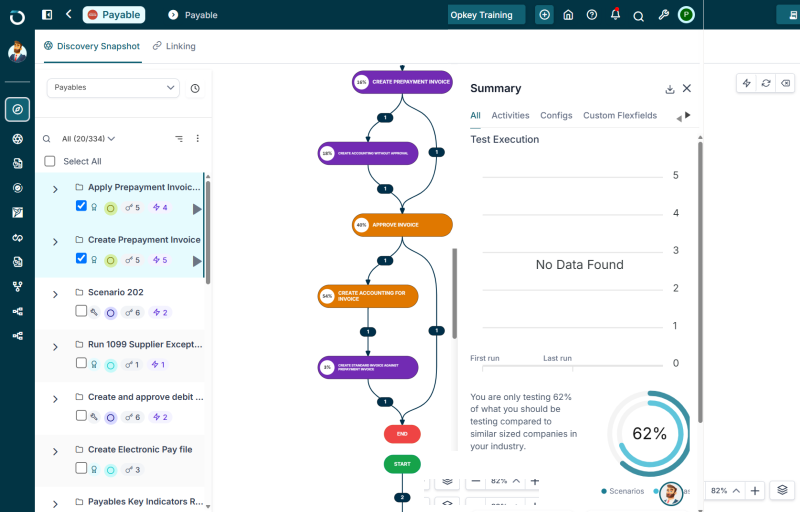
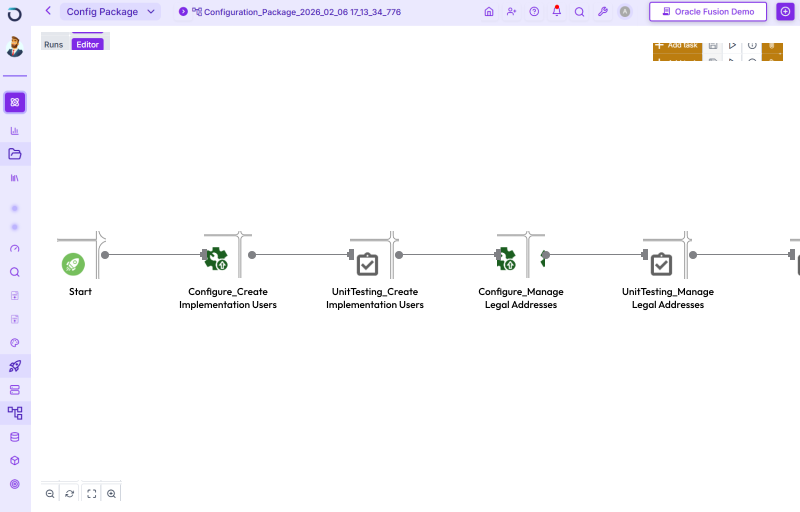
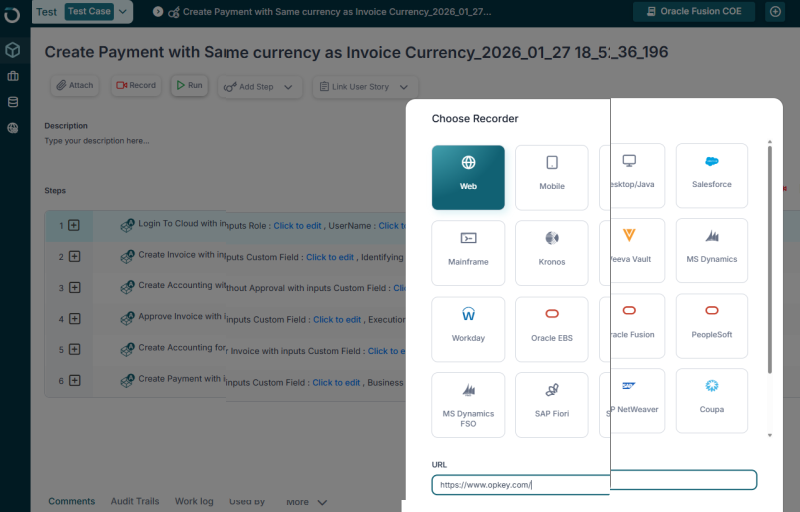
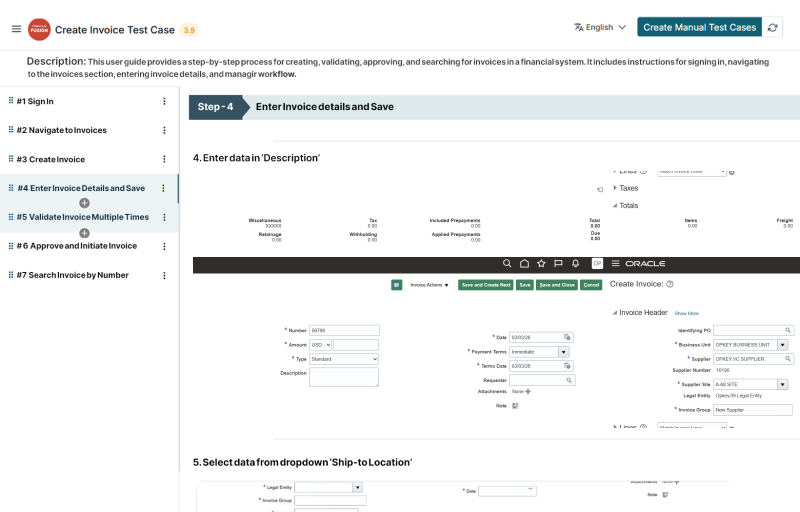
Trained on markdown optimization logic, promotional stacking rules, clearance sequencing, competitive price matching, and margin floor calculations across major retail ERP platforms.
Deep understanding of points accrual engines, tier qualification rules, redemption thresholds, partner earn/burn rates, and promotional bonus multiplier configurations.
BOPIS, ship-from-store, endless aisle, omnichannel returns processing, refund calculation logic, inventory credit rules, and tax adjustment patterns across all retail channels.
EDI 850/855/856/810 transaction generation, ASN timing rules, invoice matching algorithms, vendor scorecard configurations, and chargeback prevention patterns.
Franchise-specific pricing overrides, location-level tax configurations, labor compliance rules, inventory policies, and configuration divergence patterns across retail networks.
Demand-based scheduling algorithms, overtime calculations, predictive scheduling compliance, tip pooling configurations, and payroll integration patterns specific to retail.
Trained on markdown optimization logic, promotional stacking rules, clearance sequencing, competitive price matching, and margin floor calculations across major retail ERP platforms.
Deep understanding of points accrual engines, tier qualification rules, redemption thresholds, partner earn/burn rates, and promotional bonus multiplier configurations.
BOPIS, ship-from-store, endless aisle, omnichannel returns processing, refund calculation logic, inventory credit rules, and tax adjustment patterns across all retail channels.
EDI 850/855/856/810 transaction generation, ASN timing rules, invoice matching algorithms, vendor scorecard configurations, and chargeback prevention patterns.
Franchise-specific pricing overrides, location-level tax configurations, labor compliance rules, inventory policies, and configuration divergence patterns across retail networks.
Demand-based scheduling algorithms, overtime calculations, predictive scheduling compliance, tip pooling configurations, and payroll integration patterns specific to retail.

Everything you need to know about Opkey for Retail.
Opkey validates every order and returns path — BOPIS, ship-from-store, buy-online-return-in-store, endless aisle — including refund calculations, inventory credits, and tax adjustments specific to each channel. When an update changes how one path evaluates, Opkey catches it.
Yes. Opkey tracks franchise-specific pricing overrides, corporate pricing rules, and location-level configurations independently. When a patch applies uniformly but your configurations aren't uniform, Opkey identifies the exact locations affected.
Opkey validates EDI 850, 855, 856, and 810 transaction generation, ASN timing, invoice matching, and compliance with vendor-specific requirements. It catches the EDI formatting changes that lead to chargebacks before they're sent to vendors.
Yes. Opkey validates demand-based scheduling algorithms, overtime calculations, break compliance, predictive scheduling rules, and payroll integration — ensuring labor costs are accurate and compliance requirements are met across all locations.
Argus is trained on actual retail operations — markdown algorithms, loyalty engines, omnichannel order flows, EDI compliance, franchise configurations, and labor management from hundreds of retail organizations. It knows the difference between a benign pricing change and one that will erode margin.
Most retailers see impact within the first update cycle — eliminated pricing errors, prevented vendor chargebacks, and validated loyalty program accuracy. Peak season readiness validation is typically complete within 2 weeks of deployment.


