
Trusted by world-class enterprises








Oracle or SAP pushes an update. Your AP subledger stops tying to the GL. Intercompany eliminations produce rounding differences. Your team spends 3 days finding the root cause — while the CFO is asking why the books aren't closed.
When OCC, FDIC, or state regulators walk in, they don't just audit your financials — they audit your systems. Can you prove your approval workflows enforce SOD? That your access controls haven't drifted since the last exam? Most banks can't.
US GAAP for domestic, IFRS for international subsidiaries, regulatory reporting for the Fed. Your ERP runs one chart of accounts serving three masters — and when a configuration changes for one standard, it silently breaks another.
T+1 settlement means your treasury, cash management, and position-keeping systems must work flawlessly — every day. One broken integration between your trading platform and ERP, and you're facing settlement failures, counterparty risk, and regulatory scrutiny.
Anti-money laundering thresholds, KYC workflow triggers, sanctions screening rules — they all live as configuration in your cloud applications. When updates change how those rules evaluate, your compliance team has no way to know until an examiner finds it.
New legal entities, new charts of accounts, new consolidation rules, new intercompany agreements. Each M&A integration touches your ERP's deepest configurations — and your team is already stretched thin keeping the existing entities running.
Oracle or SAP pushes an update. Your AP subledger stops tying to the GL. Intercompany eliminations produce rounding differences. Your team spends 3 days finding the root cause — while the CFO is asking why the books aren't closed.
When OCC, FDIC, or state regulators walk in, they don't just audit your financials — they audit your systems. Can you prove your approval workflows enforce SOD? That your access controls haven't drifted since the last exam? Most banks can't.
US GAAP for domestic, IFRS for international subsidiaries, regulatory reporting for the Fed. Your ERP runs one chart of accounts serving three masters — and when a configuration changes for one standard, it silently breaks another.
T+1 settlement means your treasury, cash management, and position-keeping systems must work flawlessly — every day. One broken integration between your trading platform and ERP, and you're facing settlement failures, counterparty risk, and regulatory scrutiny.
Anti-money laundering thresholds, KYC workflow triggers, sanctions screening rules — they all live as configuration in your cloud applications. When updates change how those rules evaluate, your compliance team has no way to know until an examiner finds it.
New legal entities, new charts of accounts, new consolidation rules, new intercompany agreements. Each M&A integration touches your ERP's deepest configurations — and your team is already stretched thin keeping the existing entities running.
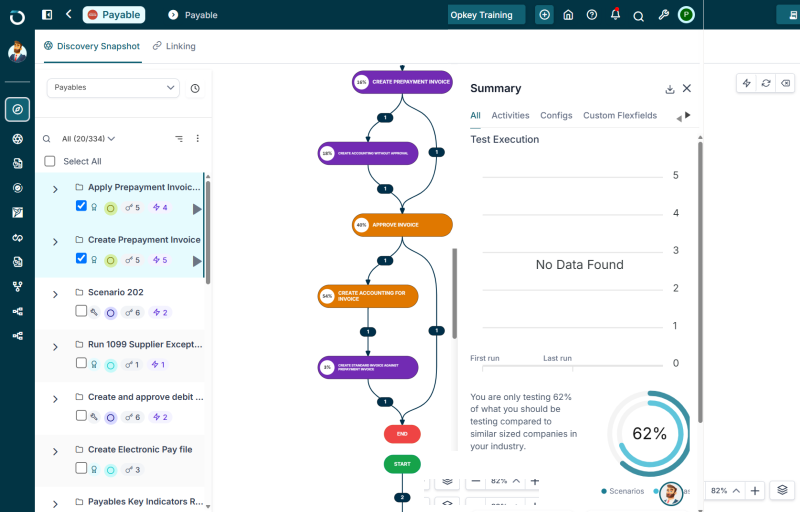
Trained on intercompany elimination rules, currency translation methods, minority interest calculations, and consolidation hierarchies across banking, insurance, and asset management organizations.
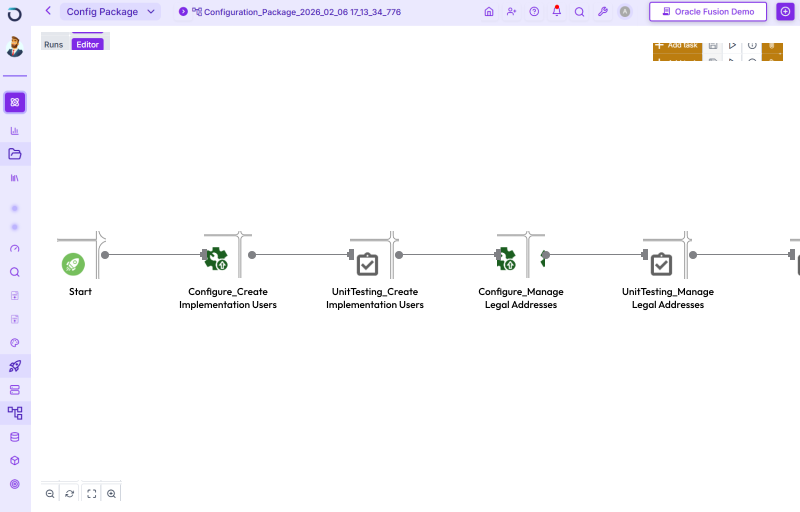
Understands SOX 404 control testing, OCC/FDIC examination requirements, Fed stress testing data dependencies, and the specific system evidence regulators expect to see.
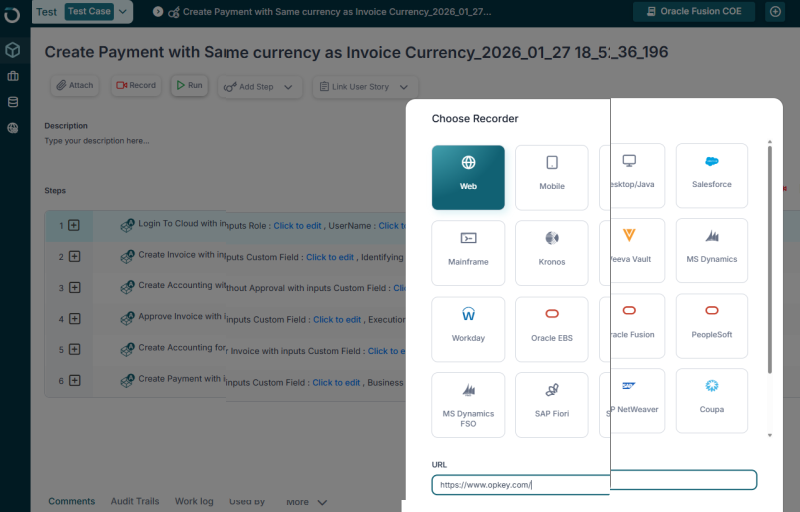
Deep knowledge of cash positioning, bank connectivity (SWIFT/BAI2), trade settlement workflows, hedge accounting, and liquidity management configurations specific to financial institutions.
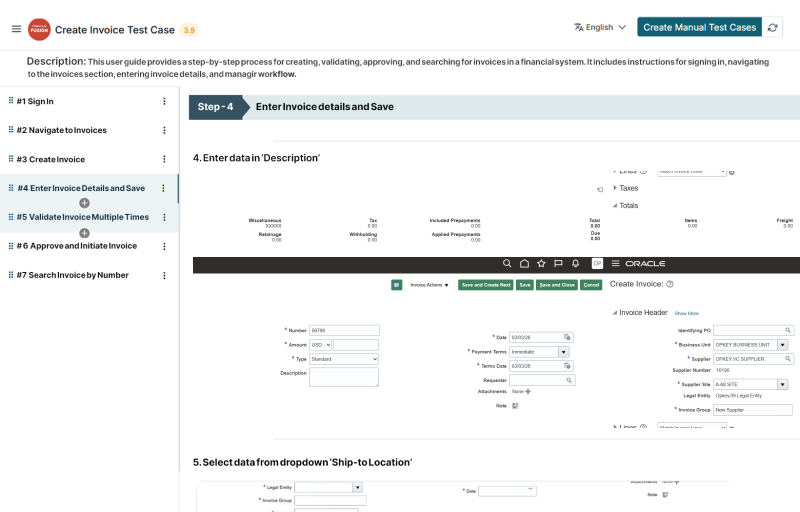
Anti-money laundering thresholds, KYC workflow triggers, sanctions screening parameters, and suspicious activity reporting rules as they exist inside ERP and compliance platforms.
Parallel ledger configurations, IFRS vs US GAAP differences in revenue recognition, lease accounting (ASC 842/IFRS 16), and regulatory capital calculations (Basel III/IV).
Entity setup, chart of accounts mapping, consolidation rule creation, intercompany agreement configuration, and cutover testing patterns from hundreds of financial services acquisitions.
Trained on intercompany elimination rules, currency translation methods, minority interest calculations, and consolidation hierarchies across banking, insurance, and asset management organizations.
Understands SOX 404 control testing, OCC/FDIC examination requirements, Fed stress testing data dependencies, and the specific system evidence regulators expect to see.
Deep knowledge of cash positioning, bank connectivity (SWIFT/BAI2), trade settlement workflows, hedge accounting, and liquidity management configurations specific to financial institutions.
Anti-money laundering thresholds, KYC workflow triggers, sanctions screening parameters, and suspicious activity reporting rules as they exist inside ERP and compliance platforms.
Parallel ledger configurations, IFRS vs US GAAP differences in revenue recognition, lease accounting (ASC 842/IFRS 16), and regulatory capital calculations (Basel III/IV).
Entity setup, chart of accounts mapping, consolidation rule creation, intercompany agreement configuration, and cutover testing patterns from hundreds of financial services acquisitions.

Everything you need to know about Opkey for Financial Services.
Talk to an expert about your Financial Services challenges
Talk to an expert →SOX tells you what controls should exist. Opkey tells you whether they actually work — continuously. When a patch changes how an approval workflow evaluates, or a new user role inadvertently creates an SOD conflict, Opkey catches it in real time, not during the next audit.
Opkey validates configurations, postings, and reconciliation rules across all your legal entities simultaneously. When a change affects US GAAP reporting, Opkey also validates the impact on IFRS ledgers, regulatory capital calculations, and consolidation — because in financial services, nothing changes in isolation.
Yes. Opkey covers treasury operations including cash positioning, bank connectivity, trade settlement workflows, hedge accounting, and liquidity management. When your ERP updates, Opkey validates that T+1 settlement flows still work correctly end-to-end.
Each acquisition brings new entities, new charts of accounts, and new consolidation rules. Opkey automates the validation of entity setup, CoA mapping, intercompany agreement configuration, and consolidation rules — reducing integration validation from months to weeks.
Argus isn't a generic AI running financial prompts. It's trained on actual financial services data — consolidation hierarchies, regulatory examination requirements, treasury workflows, AML configurations, and multi-GAAP reporting patterns from hundreds of financial institutions.
Most financial services organizations see impact within the first close cycle. Period close acceleration, automated control validation, and regulatory readiness improvements are measurable within 30-60 days of deployment.


