
Trusted by world-class enterprises








An engineer changes a sub-assembly. That ECO touches the BOM, which changes the routing, which recalculates the standard cost, which invalidates the price book, which breaks the quote the sales team sent yesterday. Nobody tested the downstream impact — because nobody could.
In process manufacturing, your recipes and formulas live as ERP configuration — ingredient ratios, potency adjustments, yield calculations, co-product/by-product splits. When an update changes how the batch calculator rounds or sequences, your production output is wrong before QA catches it.
ITAR and EAR classifications are configured per item, per destination, per end-use. One misconfigured export classification, one wrong ECCN mapping after a patch — and your shipment is held at customs. Or worse: you ship controlled technology to a restricted party and face criminal penalties.
When you send a work order operation to an outside processor, your routing, cost accounting, and quality inspection all depend on that subcontract PO being correctly generated. One update changes how outside processing evaluates — and your shop floor schedule shows work as complete that hasn't come back yet.
Your warranty obligations are calculated from the as-built BOM configuration of each serial number. When an update changes how serial-tracked BOMs resolve, your warranty reserve calculations are wrong, your service contracts under-price coverage, and your aftermarket revenue suffers.
EPA Toxics Release Inventory reporting, emissions calculations, and waste tracking all depend on accurate production data from your ERP. When material consumption calculations change after an update, your environmental reports are wrong — and EPA penalties follow.
An engineer changes a sub-assembly. That ECO touches the BOM, which changes the routing, which recalculates the standard cost, which invalidates the price book, which breaks the quote the sales team sent yesterday. Nobody tested the downstream impact — because nobody could.
In process manufacturing, your recipes and formulas live as ERP configuration — ingredient ratios, potency adjustments, yield calculations, co-product/by-product splits. When an update changes how the batch calculator rounds or sequences, your production output is wrong before QA catches it.
ITAR and EAR classifications are configured per item, per destination, per end-use. One misconfigured export classification, one wrong ECCN mapping after a patch — and your shipment is held at customs. Or worse: you ship controlled technology to a restricted party and face criminal penalties.
When you send a work order operation to an outside processor, your routing, cost accounting, and quality inspection all depend on that subcontract PO being correctly generated. One update changes how outside processing evaluates — and your shop floor schedule shows work as complete that hasn't come back yet.
Your warranty obligations are calculated from the as-built BOM configuration of each serial number. When an update changes how serial-tracked BOMs resolve, your warranty reserve calculations are wrong, your service contracts under-price coverage, and your aftermarket revenue suffers.
EPA Toxics Release Inventory reporting, emissions calculations, and waste tracking all depend on accurate production data from your ERP. When material consumption calculations change after an update, your environmental reports are wrong — and EPA penalties follow.
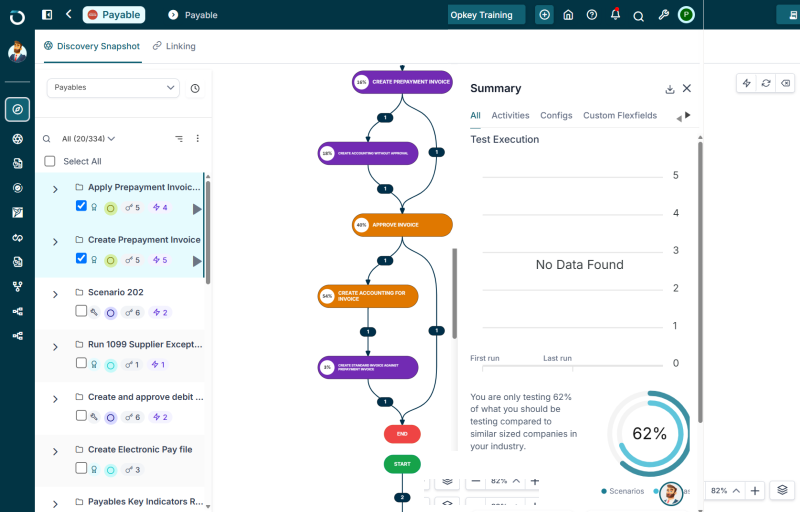
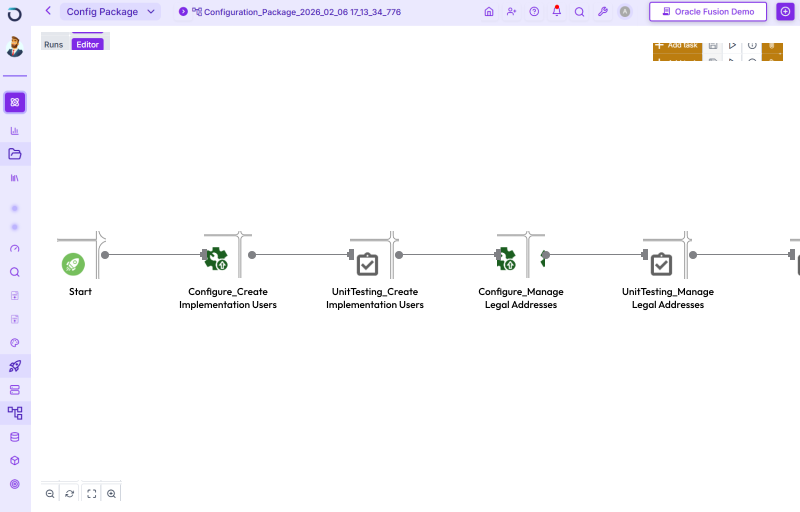
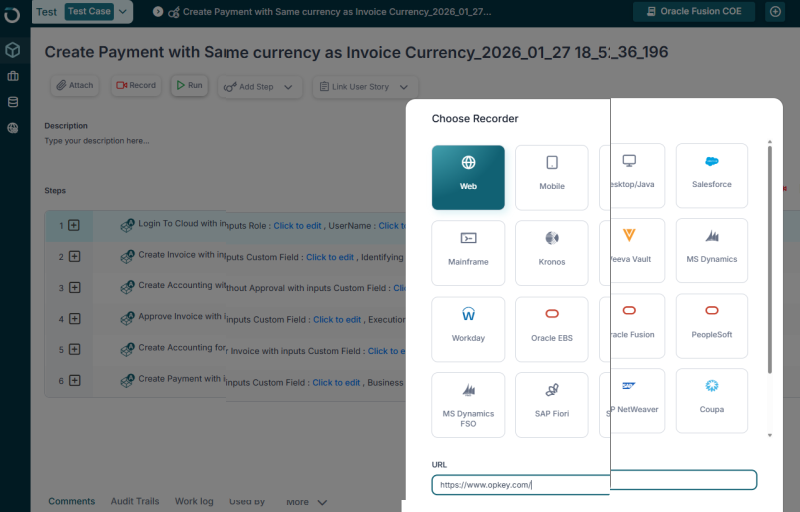
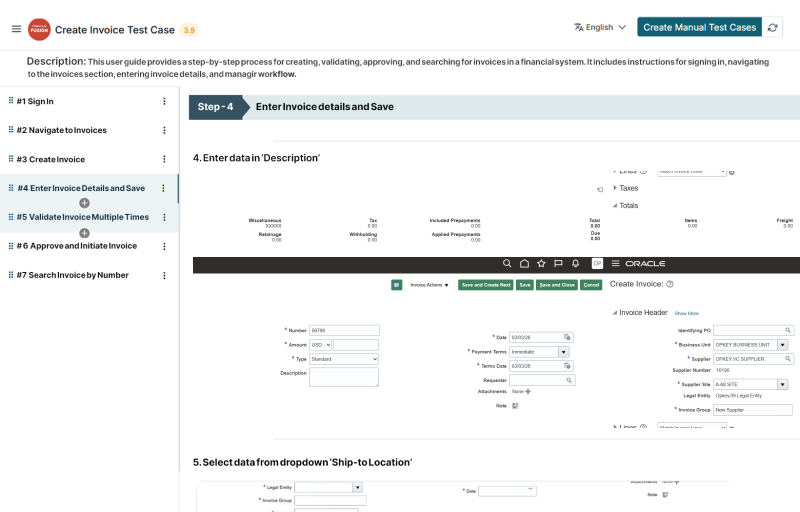
Trained on multi-level BOM structures, ECO impact chains, effectivity-based configuration, and phantom assembly resolution across discrete, process, and configure-to-order manufacturing.
Deep understanding of recipe management, potency-based calculations, batch scaling algorithms, co-product/by-product splits, and yield calculations specific to chemical, food, and pharmaceutical manufacturing.
ITAR/EAR classification rules, ECCN mapping, denied party screening, end-use certificate workflows, and deemed export configurations specific to aerospace, defense, and high-tech manufacturing.
Subcontract PO generation, outside operation routing, supplier quality integration, cost accounting for outside processing, and shop floor schedule impact analysis.
Serial-tracked BOM resolution, warranty reserve calculations, service contract pricing, RMA processing, and aftermarket parts management configurations.
EPA TRI reporting data dependencies, emissions calculation configurations, waste tracking workflows, SDS management, and OSHA recordkeeping integration patterns.
Trained on multi-level BOM structures, ECO impact chains, effectivity-based configuration, and phantom assembly resolution across discrete, process, and configure-to-order manufacturing.
Deep understanding of recipe management, potency-based calculations, batch scaling algorithms, co-product/by-product splits, and yield calculations specific to chemical, food, and pharmaceutical manufacturing.
ITAR/EAR classification rules, ECCN mapping, denied party screening, end-use certificate workflows, and deemed export configurations specific to aerospace, defense, and high-tech manufacturing.
Subcontract PO generation, outside operation routing, supplier quality integration, cost accounting for outside processing, and shop floor schedule impact analysis.
Serial-tracked BOM resolution, warranty reserve calculations, service contract pricing, RMA processing, and aftermarket parts management configurations.
EPA TRI reporting data dependencies, emissions calculation configurations, waste tracking workflows, SDS management, and OSHA recordkeeping integration patterns.

Everything you need to know about Opkey for Manufacturing.
When an ECO changes a BOM, Opkey traces every downstream impact — affected routings, cost roll-ups, price book changes, warranty calculations, and export classifications. It generates targeted test suites for every affected area and validates the full cascade automatically.
Yes. Opkey validates recipe calculations, potency adjustments, batch scaling, yield calculations, and co-product/by-product splits. When an update changes how the batch calculator evaluates, Opkey catches the change before it affects production output.
Opkey validates ITAR/EAR classifications, ECCN mappings, denied party screening rules, and end-use certificate workflows after every update. It ensures export compliance configurations haven't drifted — preventing shipment holds and regulatory violations.
Yes. Opkey validates subcontract PO generation, outside operation routing, cost accounting, and shop floor schedule impact. When an update changes how outside processing evaluates, Opkey detects the change before work orders route incorrectly.
Argus is trained on actual manufacturing operations — BOM structures, ECO patterns, recipe management, export compliance, outside processing, and cost accounting from hundreds of discrete and process manufacturers. It understands the difference between a benign BOM change and one that cascades through the entire production system.
Most manufacturers see impact within the first update cycle — zero production stops from system changes, validated ECO cascades, and continuous export compliance assurance. ROI is measurable within 30-60 days.


